
Hidden Toxins in L.A. Homes After the January Wildfires
A New York Times investigation (June 24, 2025) revealed that many Los Angeles homes spared by January’s wildfires still contain toxic residues—cyanide, acetaldehyde, soot, and fine particulates—embedded in walls, furniture, and personal items. Experts warn that cleanup can be complex and costly, while insurers often resist paying for comprehensive testing. This guide outlines documented risks, practical steps for indoor air and surface testing, safe cleaning methods (HEPA/wet wiping), protective gear, and strategies to advocate for insurance coverage. For questions, contact McGonigle Law at (800) 713-5260.
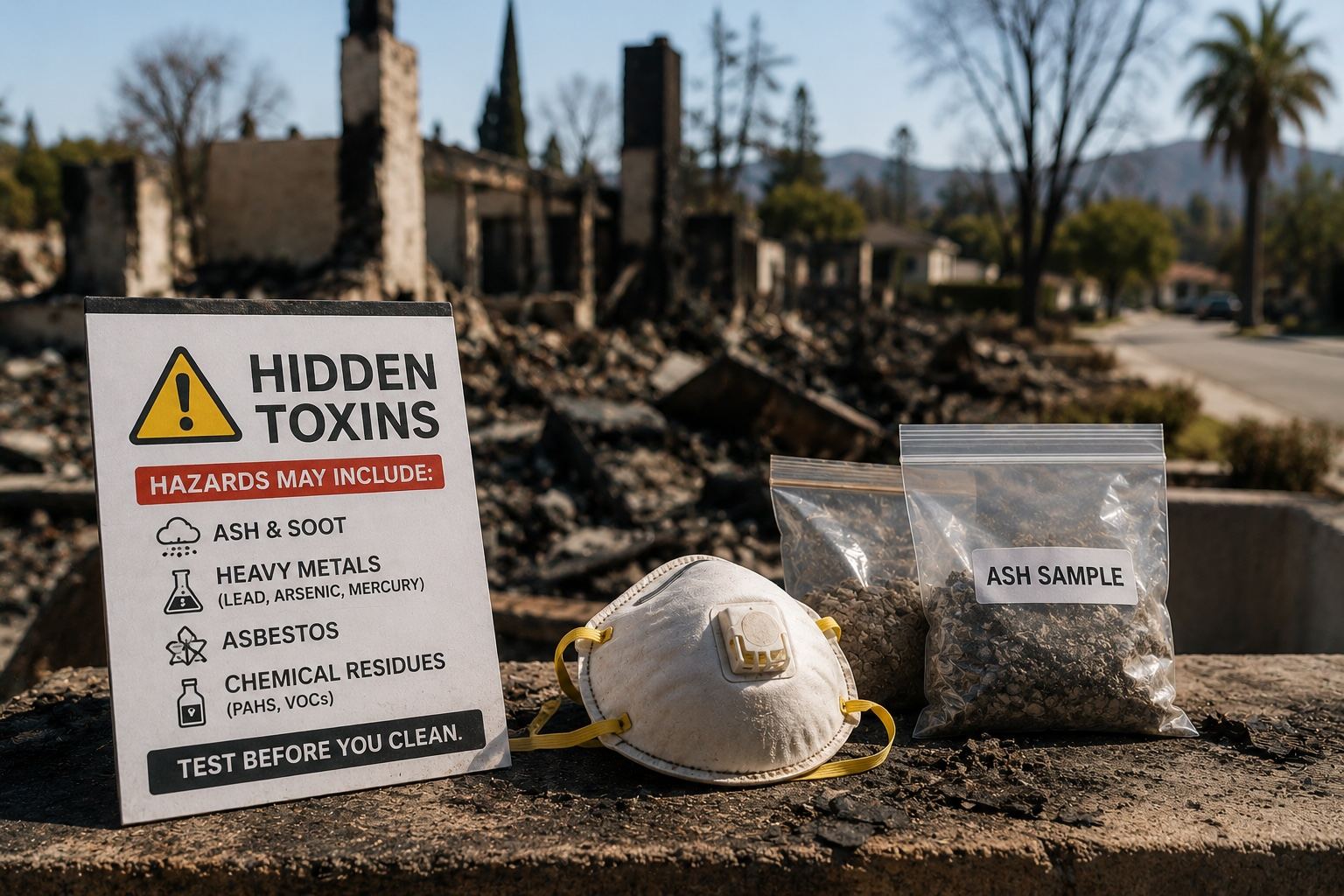
In the article “'Unsafe to Inhabit’: The Toxic Homes of L.A.”, a New York Times investigation published on June 24, 2025 examined the hidden contamination in homes that were spared by January’s wildfires in Los Angeles. Various key findings were observed that all homeowners should take into consideration.
Key Findings from the NYT Report
1. Homes that looked OK may still be toxic
Many survivors thought they were lucky to avoid full destruction. But investigators found that smoke, toxins, and ash had infiltrated homes—even those left standing—with hazardous substances and residues:
- Cyanide detected in basement plaster and sofa
- Acetaldehyde (a carcinogen) in kitchen air
- High levels of particulates and soot throughout the interior
2. Materials turned into carcinogens by fire
Common household materials released dangerous compounds when burned:
- Formaldehyde from plastics
- Benzene (from rubber, hoses, tires)
- Carcinogenic gases from polyester/fleece upholstery
- Smoke infiltration from electronics like printers and TVs generated cyanide-contaminated residue
3. Inequity in testing and insurance practices
- A survey of over 500 households near burn zones showed most insurers refused to cover testing. Those with means hired independent tests at high personal cost
- Industrial hygienists, working with NYT reporters, spent nearly 100 hours inspecting and testing damaged homes, only to face resistance from insurers on claims
4. Experts support the concern
Industrial hygienists, including one who has tested dozens of L.A. homes, likened the contamination to burn pit exposure studied in military contexts. These toxins—settled deep into couches, drywall, and personal items—may exceed cleanup costs and pose long-term health risks
Context & Broader Contextual Coverage
Additional analyses reinforce the problem:
- Independent soil testing by the Los Angeles Times revealed that many cleared lots still contain lead, arsenic, and mercury well above California health standards—especially in areas like Altadena and Pacific Palisades
- Instead of soil testing, federal officials opted to remove topsoil (about 6 inches), a method experts say is insufficient. Homeowners like Lupe Sanchez discovered lead levels three times above safety thresholds in areas that had supposedly been cleared
- Worker safety issues also emerged: many immigrant day laborers involved in cleanup lacked proper training or protective equipment, exposing them to residues containing asbestos, heavy metals, and toxic dust
Health Risks & What Homeowners Can Do
Health risks documented include:
- Increased risk of cancers, respiratory diseases, neurological harm (lead, arsenic, mercury)
- Acute symptoms such as nausea, headaches, coughing, eye irritation
- Long-term effects similar to those seen in populations exposed to toxic burn pit environments
Recommendations for homeowners:
- Independently request full indoor air and surface testing via certified industrial hygienists for compounds like cyanide, formaldehyde, benzene, and metals.
- Wear N95 or respirator masks, gloves, and protective clothing when cleaning or inspecting.
- Use wet cleaning methods—misting surfaces, vacuuming HEPA filters, deep washing walls and ceilings—to remove settled toxins. Opening windows helps in some cases, but may bring outdoor air in untimely ways.
- Advocate legally or administratively to encourage insurance coverage for comprehensive testing and remediation.
In the article “’Unsafe to Inhabit’: The Toxic Homes of L.A.”, a New York Times investigation published on June 24, 2025 examined the hidden contamination in homes that were spared by January’s wildfires in Los Angeles. Various key findings were observed that all homeowners should take into consideration.
If you should have any questions or are in need of further information, please call the Law Offices of Timothy D. McGonigle for a free confidential consultation.
Telephone number: (800) 713-5260
Solutions
Your Attorney Failed You. Don't Let the Clock Run Out Too.
California's statute of limitations for legal malpractice is strict. Every day you wait is a day closer to losing your right to recover. Contact McGonigle Law today for a free, confidential consultation — we'll tell you honestly whether you have a case.