
Filing a Premature Lawsuit against a Government Entity Cannot Be Saved by Refiling Later
A recent California Court of Appeal decision in Harland v. City of West Hollywood reinforces the strict compliance requirements of the California Government Claims Act. The court held that a plaintiff who files suit before a government claim is denied or before the 45-day response period expires cannot correct the error by dismissing and refiling the case later. The ruling serves as a critical reminder that procedural compliance is mandatory when pursuing claims against public entities.
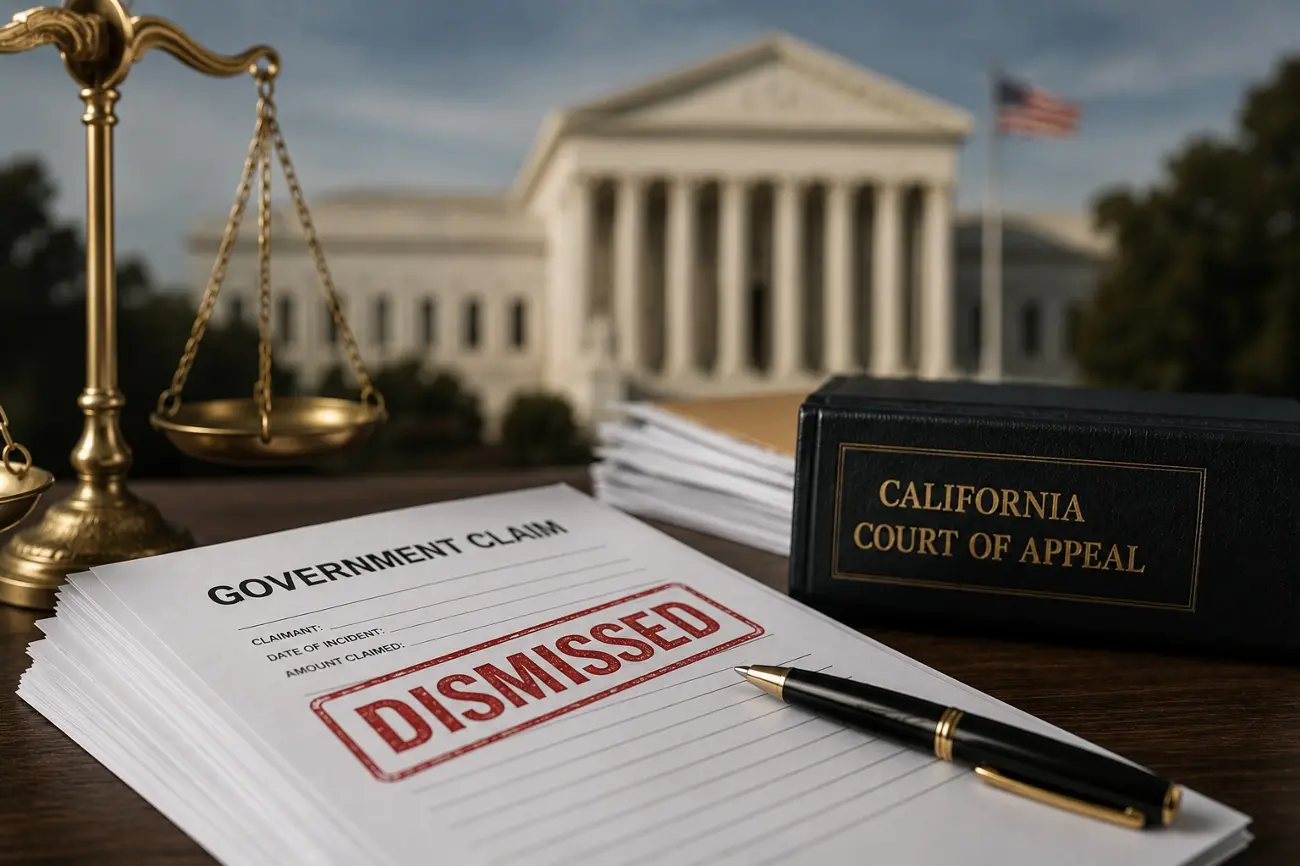
Individuals who suffer injuries caused by a city, county, school district, or other public entity in California must navigate the strict requirements of the California Government Claims Act before filing a lawsuit. A recent California Court of Appeal decision serves as an important reminder that these procedural requirements are not mere technicalities—they are mandatory conditions that must be satisfied before a lawsuit can proceed.
In Harland v. City of West Hollywood, the Court of Appeal held that a plaintiff who files a lawsuit before a public entity has denied a government claim, or before the statutory 45-day response period expires, cannot fix that mistake simply by dismissing the case and filing a new lawsuit later.
The Government Claims Act Requirements
Before suing a California public entity for personal injuries or other damages, a claimant must first submit a written government claim to the responsible agency. Once the claim is submitted, the public entity has 45 days to accept or reject the claim.
The purpose of this waiting period is to give the public entity an opportunity to investigate the claim, evaluate potential liability, and possibly resolve the matter without litigation.
Until the claim is formally rejected or the 45-day response period expires, the claimant generally may not file a lawsuit.
What Happened in Harland?
Michelle Harland suffered injuries in October 2022 after tripping and falling on a sidewalk in the City of West Hollywood.
After submitting a government claim, Harland filed a lawsuit against the City before the City had denied the claim and before the statutory 45-day period had expired.
Recognizing that the lawsuit had been filed prematurely, Harland later voluntarily dismissed the action without prejudice. After the 45-day period expired, she filed a second lawsuit asserting the same claims.
The City challenged the second lawsuit, arguing that Harland's initial failure to comply with the Government Claims Act barred the action entirely.
The trial court agreed and sustained the City's demurrer. Harland appealed.
The Court of Appeal's Decision
The Court of Appeal affirmed the dismissal.
The court emphasized that compliance with the Government Claims Act is a mandatory condition precedent to maintaining a lawsuit against a public entity. A lawsuit filed before the claim is denied or before the 45-day waiting period expires is premature and unauthorized.
More importantly, the court rejected the argument that the defect could be cured by voluntarily dismissing the premature lawsuit and filing a new action later.
According to the court, the filing of the initial premature lawsuit violated the statutory scheme. Once that occurred, the plaintiff could not erase the mistake by dismissing and refiling. The failure to comply with the claim-presentation requirements remained a fatal defect.
Why This Decision Matters
The Harland decision highlights the unforgiving nature of the Government Claims Act. Courts routinely describe the Act as requiring strict compliance, and this case reinforces that principle.
For injured individuals and their attorneys, the lesson is straightforward:
- File the government claim first.
- Wait for the public entity to reject the claim or allow the full 45-day response period to expire.
- Only then file a lawsuit.
The Court of Appeal's ruling serves as a warning that procedural mistakes under the Government Claims Act may permanently bar otherwise valid claims. Individuals injured on public property, in accidents involving government vehicles, or through the negligence of public employees should ensure that all Government Claims Act requirements are satisfied before initiating litigation.
When claims against public entities are involved, timing matters—and filing too soon may be just as harmful as filing too late.
Harland v. City of West Hollywood, California Court of Appeal, Second Appellate District, Case No. B343375.
Solutions
Your Attorney Failed You. Don't Let the Clock Run Out Too.
California's statute of limitations for legal malpractice is strict. Every day you wait is a day closer to losing your right to recover. Contact McGonigle Law today for a free, confidential consultation — we'll tell you honestly whether you have a case.